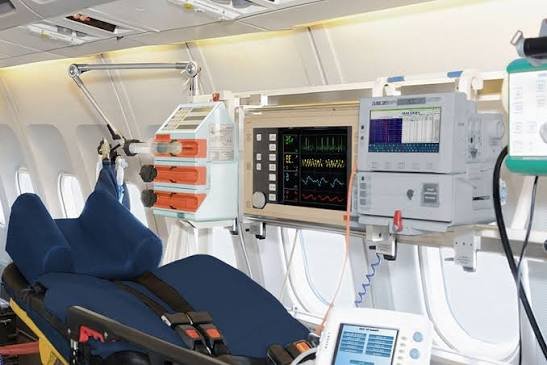
Moving a patient safely from one location to another is an important responsibility in healthcare and emergency medical services. Whether the journey is between hospital departments, from a home to an ambulance, or from an accident scene to an emergency department, healthcare professionals need equipment that supports both patient safety and efficient working practices.
Patient transport equipment comes in many forms. Stretchers, ambulance cots, stair chairs, transfer boards, restraints, and other accessories may all play a role depending on the situation.
Choosing appropriate equipment can help medical teams move patients more efficiently while reducing unnecessary physical strain on staff.
Why Patient Transport Equipment Matters
Patient transport may appear straightforward, but moving someone who is injured, seriously ill, unconscious, or unable to walk can present significant challenges.
The patient needs to remain secure and as comfortable as circumstances allow. Healthcare professionals also need to consider their own safety while lifting, lowering, turning, or transferring the individual.
Equipment designed specifically for patient transport helps address these challenges.
The correct equipment can provide stability during movement, assist with positioning, and make it easier for healthcare teams to navigate different environments.
The equipment required will depend on the patient’s condition and the setting in which the transfer takes place.
Stretchers and Ambulance Cots
Stretchers are among the most recognizable pieces of patient transport equipment.
Modern medical stretchers are designed to help healthcare professionals move patients while maintaining stability and providing access when treatment is required.
Different models are intended for different environments.
Ambulance cots, for example, need to work effectively inside emergency vehicles and during loading and unloading. Hospital stretchers may be designed primarily for moving patients between departments.
Some models use manual mechanisms, while others incorporate powered features that assist with raising and lowering the patient.
Weight capacity is another important consideration. Equipment should always be selected and operated according to its specifications.
Stretchers R Us, for example, lists Stryker stretcher models with different capacities and configurations for patient transport applications.
Stair Chairs for Difficult Locations
Not every patient can be reached using a conventional stretcher.
Buildings with narrow corridors, staircases, limited elevator access, or other space restrictions can create challenges for emergency medical teams.
Stair chairs provide another option in suitable circumstances.
These devices are designed to help trained personnel move certain patients through areas where a full stretcher may be impractical.
As with any medical transport equipment, teams need to use the appropriate device for the patient’s condition and follow relevant procedures and manufacturer instructions.
The goal is not simply to move the patient quickly. The movement should also be controlled and appropriate for the situation.
Transfer and Spine Boards
Transfer boards can assist healthcare professionals when moving patients between surfaces.
For example, a patient may need to be transferred from a bed to another piece of equipment. Suitable transfer equipment can make the process more manageable while reducing unnecessary movement.
Some emergency situations may require more specialized equipment.
The type of board or transfer device selected should reflect the patient’s condition, the environment, clinical protocols, and the training of the professionals involved.
Equipment should never replace proper assessment and technique.
Instead, it should support trained professionals in performing transfers as safely and efficiently as possible.
Restraints and Safety Accessories
Accessories are another important part of patient transport.
Stretcher straps and restraint systems help keep patients secure during appropriate forms of transport. Stretchers R Us describes stretcher straps designed for patient security, including adjustable systems with quick release features.
Other accessories may include replacement mattresses, wheels, side rails, IV poles, batteries, chargers, storage components, and mounting equipment.
Although some of these items may appear relatively minor, their condition can affect the usability of the main equipment.
Healthcare organizations should therefore include accessories and replacement components in their inspection and maintenance procedures.
Choosing Reliable Patient Transport Equipment
Healthcare facilities and emergency response organizations should evaluate transport equipment carefully.
Important considerations can include the intended environment, patient needs, weight capacity, dimensions, ease of operation, compatibility with existing systems, maintenance requirements, and availability of replacement components.
Staff requirements are also important.
Equipment that is difficult to operate can create unnecessary complications during time-sensitive situations. Appropriate training should accompany the introduction of new equipment.
Healthcare organizations and emergency response teams can also explore specialist suppliers such as Stretchers R Us when comparing stretchers, stair chairs, replacement parts, and other equipment designed for patient transport.
The company carries patient transport equipment from manufacturers including Stryker and Ferno, as well as parts and accessories for maintaining equipment.
Consider Staff Safety and Ergonomics
Patient safety is central to transport, but staff safety should not be overlooked.
Healthcare workers may perform lifting and transfer tasks repeatedly during a shift. Poor technique or unsuitable equipment can place unnecessary physical demands on employees.
Ergonomically designed equipment can help reduce some of this strain.
Powered lifting features are one example. Stretchers R Us describes powered hydraulic stretcher systems designed to assist with raising and lowering patients during transport.
However, technology alone cannot eliminate every risk.
Organizations should combine suitable equipment with training, safe working procedures, appropriate staffing, and regular equipment inspections.
Maintain Equipment Regularly
Patient transport equipment needs to remain dependable.
Routine inspection can help identify worn wheels, damaged straps, battery problems, loose components, deteriorated mattresses, or other issues before they interfere with patient transport.
Organizations should follow applicable manufacturer guidance and their own maintenance procedures.
Records can also help teams keep track of inspections, servicing, repairs, and replacement schedules.
Replacement parts should be compatible with the equipment for which they are intended. Using the wrong component could affect performance or reliability.
Regular maintenance is particularly important for equipment used frequently or in demanding emergency environments.
Consider New and Refurbished Equipment Carefully
Healthcare organizations may encounter both new and refurbished equipment when purchasing patient transport products.
Budget is an important consideration, particularly for smaller organizations and services that need to equip several vehicles or facilities.
Refurbished equipment can sometimes provide another purchasing option, but buyers should understand what inspection, testing, servicing, and warranty processes apply before making a decision.
Stretchers R Us offers both new and refurbished equipment and states that products are inspected before sale.
Regardless of whether equipment is new or refurbished, buyers should evaluate its condition, specifications, suitability, and support options.
Train Staff to Use Equipment Correctly
Even high quality equipment can be ineffective when users do not understand how to operate it properly.
Training should cover normal operation, safety features, patient securing procedures, equipment limitations, and relevant emergency procedures.
Staff should also know how to recognize potential equipment problems.
If a stretcher, chair, restraint, or other device appears damaged or does not operate correctly, employees should know how to report the issue and remove the equipment from service when necessary.
Refresher training can help maintain familiarity, particularly for equipment that employees use infrequently.
Build a More Reliable Patient Transport System
Safe patient transport depends on more than a single piece of equipment.
Organizations need suitable devices, trained staff, clear procedures, regular inspections, and dependable maintenance.
They should also consider how different pieces of equipment work together.
A stretcher may require compatible restraints, loading systems, replacement batteries, mattresses, or other components. Planning for these requirements can make equipment management easier over the long term.
Healthcare facilities and emergency response organizations that regularly review their patient transport systems can identify weaknesses before they become operational problems.
The result can be a more organized approach that supports patients and the professionals responsible for their care.
Frequently Asked Questions
What equipment is commonly used for patient transport?
Common patient transport equipment includes stretchers, ambulance cots, stair chairs, transfer boards, wheelchairs, restraint systems, and specialized accessories. The appropriate equipment depends on the patient and the environment.
What should organizations consider when choosing a stretcher?
Important factors can include weight capacity, intended use, dimensions, ease of operation, compatibility, maintenance requirements, staff training, and availability of replacement parts.
Why are stretcher straps important?
Suitable restraint systems help keep patients secure during transport when used correctly. Staff should follow relevant procedures and manufacturer instructions when securing patients.
What is the difference between a manual and powered stretcher?
Manual stretchers rely more heavily on physical operation by staff. Powered models can include systems that assist with raising and lowering patients, which may reduce some of the physical demands associated with transport.
How often should patient transport equipment be inspected?
Inspection schedules depend on the equipment, manufacturer guidance, frequency of use, and organizational requirements. Frequently used equipment should be checked regularly so damage or wear can be identified promptly.
Can healthcare organizations buy refurbished stretchers?
Refurbished equipment is available from some specialist suppliers. Buyers should evaluate the refurbishment process, inspection standards, equipment condition, specifications, warranty, and suitability before purchasing.
Why is staff training important for patient transport equipment?
Training helps staff understand how to operate equipment correctly, secure patients appropriately, recognize equipment limitations, and identify potential problems before or during use.
What accessories may be required for a medical stretcher?
Depending on the model, accessories and replacement components can include straps, mattresses, wheels, side rails, IV poles, batteries, chargers, storage components, and fastening equipment.