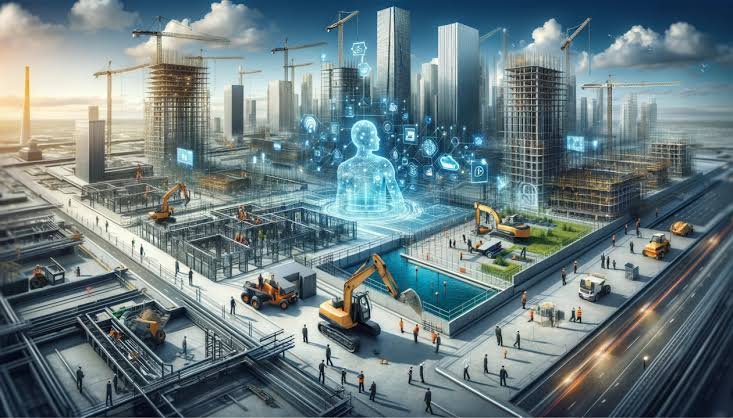
The building business is going through a big change as artificial intelligence (AI) is now used in everyday work. It’s not just for test projects anymore. Running big jobs and working on things like roads means you have to deal with rising costs, worker changes, many rules, and short times to get things done. Now, people use real-time data to cut down risk, make fewer mistakes, and keep the business making money. With tools like computer vision, smart analytics, and machine learning, teams can turn what used to be different daily jobs into one clear system that uses data.
A big part of this change is making sure that the job site’s information goes smoothly with office planning. A special erp for construction helps by giving teams one base to handle things. Teams use it for moving money, buying things they need, and staying up to date with how the job is going each day.
Key Drivers Shaping AI Integration in Construction
In the past, companies that be in construction used many different spreadsheets. People would also write notes by hand when they were at the sites. Today, it is not easy to work on big projects. There are new things that make it harder. Now, AI-powered systems are used to help fix four main weak points in how these companies do their work.
- Predictive Schedule Optimization: AI looks at old project work, weather, when supplies will show up, and when workers can be on the job. This helps make new schedules that change early, so small delays do not turn into big ones.
- Automated Cost Estimation and Bidding: Machine learning uses old job data and new supply chain costs. This lets people make good and fast bids in a few minutes, with less chance for mistakes.
- Job-Site Computer Vision & Safety: Cameras on site and drones use computer vision to see how the building is going. They can spot safety troubles or other things, and check quality right away.
- AI-Driven Financial Forecasting: Automatic modeling keeps lining up new jobs with what is done out there. This stops money troubles and cuts out budget surprises.
Core Pillars of the AI-Powered Construction Enterprise
1. Computer Vision and On-Site Visual Intelligence
Computer vision is now more than just watching the edges of a place. It can use good video streams and scans from drones to track what has been done. It can also check how the concrete is setting and see how the building frame is doing. All of this goes straight to project management software. This means people do not guess when giving updates. Field work is tracked with clear and real data.
2. Generative Design and Building Information Modeling (BIM)
Connecting generative AI with Building Information Modeling (BIM) lets engineering teams make many design changes quickly. The AI spots problems, such as air ducts running into strong beams, before work starts on site. This stops costly changes that might come up when the work is going on.
3. Automated Risk Mitigation and Safety Intelligence
Predictive risk engines check the project documents, daily logs, and all submittals all the time. These tools help find dangers at the site that people might not see. They can find patterns that show when subcontractors are slow or if there could be a safety problem. This lets management step in early to fix things before they get worse, instead of waiting for something to go wrong.
Traditional Management vs. AI-Enabled Enterprise Management
| Operational Feature | Traditional Construction Management | AI-Enabled Enterprise Management |
| Project Scheduling | Static Gantt charts updated manually | Dynamic, AI-driven adaptive scheduling |
| Risk Detection | Post-event audits and retrospective reviews | Predictive risk alerting and preventive action |
| Budget Control | Monthly lagging invoice reconciliation | Real-time earned value and committed cost tracking |
| Quality Control | Periodic manual site walk-throughs | Continuous computer vision & spatial progress telemetry |
Actionable Steps for Enterprise AI Deployment
- Set Up Data Systems: Clean and organize old project records, submittals, and cost codes. This lets AI use good data.
- Focus on Key Workflows: Use AI on big tasks like cost estimates, bidding, or seeing where you might have schedule risks.
- Connect Field and Office Work: Send field analytics from phones right to executive dashboards. This way, site managers and controllers can see all work in one spot.
Elevating Enterprise Governance Through AI
Artificial intelligence is changing how people run a strong building company. It helps by taking over boring office work. It also cuts down on work people need to do more than once. AI can show problems early, even when the work is happening on many job sites at the same time. With AI, business leaders have better ways to watch everything at work. When you add these smart tools into a special erp for construction setup, general contractors can keep good profits, finish jobs on time, and stay ahead of others in the business.