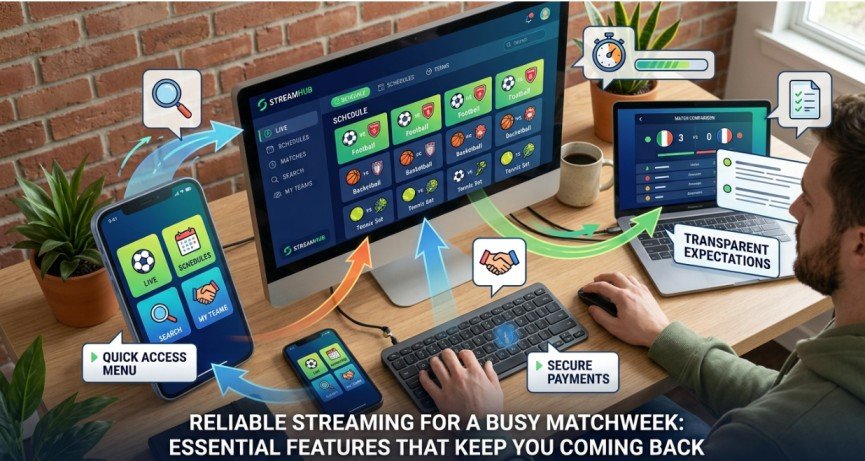
A busy matchweek can turn choice into work. Several fixtures overlap, schedules change, and every spare minute matters. When you evaluate sports streaming sites, the useful question is not which homepage makes the loudest promise. It is which service helps you understand what may be available, reach the relevant area without confusion, and make a sensible viewing decision before the action starts. That saves effort when fixtures overlap.
Return visits are earned through a series of ordinary experiences rather than one dramatic feature. Clear navigation, current information, transparent expectations, and manageable page behavior all matter. Your standards should also reflect your own habits: a weekend viewer and someone tracking several competitions may value different things. A short evaluation routine lets you compare options consistently without assuming that any site can guarantee a specific event or flawless session.
Begin With Clear Scope and Honest Expectations
A useful service explains its general scope in language you can understand. You should be able to tell whether it focuses on one sport, several competitions, or worldwide events without decoding vague promotional claims. Broad scope is not the same as confirmed availability. Treat descriptions as orientation, then check the current page and independent schedule information for the particular match you want to follow. That habit keeps comparison grounded in current evidence.
On its verified homepage, halosports.tv advertises free live sports streaming covering leagues and events worldwide. That statement describes how the homepage presents the service; it does not prove that every competition, fixture, or feed will appear whenever you visit. The same distinction should guide every comparison. Reward sites that set understandable expectations, and resist turning broad marketing language into a guarantee it does not actually make.
Check Whether Navigation Reduces Search Time
During a crowded week, navigation should help you move from arrival to a relevant listing quickly. Look for labels that make sense, sensible grouping, and a page structure that does not bury basic choices beneath unrelated material. You can test this without waiting for a major game. Visit at an ordinary time and see whether you understand where to look, how to return, and what each visible section appears to contain.
Consistency matters across return visits. If familiar controls or categories move constantly, you spend attention relearning the page instead of preparing for the match. That does not mean a site must never change; useful redesigns happen.
The test is whether each change keeps common actions easy to discover. A straightforward route is especially helpful on a phone-sized screen, even though you should verify actual device behavior yourself rather than assume universal support. Test the screen size you normally use.
Examine Schedule Information Carefully
Schedule details should be readable enough for you to compare them with another current source. Look for the event name, competition context, date, and time where supplied, then confirm the timezone. A clean listing can still be wrong or stale, so appearance is not evidence of accuracy. Local broadcaster pages, league schedules, and trusted score services can help you verify what is happening and when.
Pay attention to updates during weeks shaped by postponements, weather, or tournament changes. A service worth revisiting should not require you to remember an outdated time from yesterday, yet you should still perform your own check shortly before viewing.
This habit separates site evaluation from blind trust. You are judging whether information is presented usefully while accepting that live sport can change after a listing was first published. Record when the latest check occurred.
Notice Page Behavior Before the Match
Test the page when the result does not matter. Observe how quickly useful content appears, whether controls respond as expected, and whether intrusive elements interrupt basic navigation. One slow visit may reflect your connection, local network demand, or a temporary problem rather than the site itself. Repeat the check under similar conditions before drawing a strong conclusion from a single session.
Also notice whether the page communicates what is happening. A visible loading state or plain error message gives you more direction than a blank area. Still, avoid interpreting good page behavior as guaranteed stream reliability. Interface responsiveness, feed continuity, and event availability are separate questions.
Your evaluation becomes sharper when you record which part worked or failed instead of summarizing the entire service as simply good or bad. Precise notes make later comparisons fairer.
Look for Transparency Around Access
Before relying on a service, understand what it says about cost, accounts, region, and access. Do not infer requirements from silence or from another user’s experience. Conditions can differ by location and can change.
Read the visible information and relevant terms where available, then decide whether the arrangement suits you. A service that makes its conditions understandable saves you from discovering an unwanted step at kickoff. Check again after any major redesign.
Transparency also means distinguishing the site from third-party destinations, advertisements, or embedded material. Watch the address bar and read prompts before selecting anything. You should not assume that every panel on a page belongs to the same operator.
This is a general browsing discipline, not a claim that a named service is safe or unsafe. Your decision should rest on what you can inspect, not on confidence borrowed from polished design. Pause whenever ownership or purpose is unclear.
Compare Convenience Without Ignoring Tradeoffs
Convenience may mean fewer steps, a readable schedule, or quick access to the sports you follow. List the two or three things that save you the most time, then compare services against those needs. A huge catalog may be less useful than focused organization if you watch one league. Conversely, narrow coverage may frustrate you during tournaments that cross several competitions. Your priorities may also change during the season.
Free access can be appealing, but price is only one part of the decision. Consider clarity, interruptions, current listings, and how much checking the page requires from you. If you are assessing a sports streaming site, keep the evaluation general and evidence based. No single anchor, brand mention, or homepage claim can substitute for observing the service directly during several ordinary visits. Compare like situations whenever possible.
Create a Repeatable Matchweek Test
Use the same short test for each candidate. First, find a future fixture; second, confirm its details elsewhere; third, inspect how the site describes access; and fourth, note any friction before you reach the relevant area. Repeat the process for a different sport or competition if breadth matters to you. A consistent test prevents a favorite result or exciting match from coloring your judgment of the entire service.
Keep notes simple: date, task, outcome, and one sentence about the experience. This record helps you distinguish recurring problems from isolated ones and improvements from lucky sessions. It also stops comparisons from becoming vague memories. You may discover that one option is easier for quick checks while another is clearer for browsing.
Returning to different sites for different purposes can be a rational choice rather than indecision. The record should inform choices, not become homework.
Know When a Return Visit Is Earned
A site earns another visit when it repeatedly respects your time and makes its scope understandable. That judgment should remain provisional. Recheck your preferred option occasionally because interfaces, listings, and terms can change. Loyalty is useful only while the service continues to meet the standards that created it. You are choosing a practical tool for a busy week, not making a permanent declaration about one brand. Keep the standard higher than mere familiarity.
Your final measure is how little unnecessary effort sits between your question and a trustworthy next step. Sometimes that step is viewing; sometimes it is confirming that you need another source. Both outcomes can be useful when the information is clear. By separating presentation, access, schedule quality, and stream performance, you make calmer comparisons and build a small rotation of options that fits the way you actually follow sport.